Speaking & ConversationsInspiring New Ways of Thinking.
The most meaningful conversations don't always provide immediate answers. Sometimes they introduce a question that changes how we understand everything that follows.
For more than three decades, I've worked at the intersection of entrepreneurship, technology, creative strategy, and emerging ideas. My journey has taken me from design and business development into blockchain, artificial intelligence, software architecture, and philosophical research. Along the way, I've become increasingly interested in how these disciplines connect and what those connections reveal about the future.
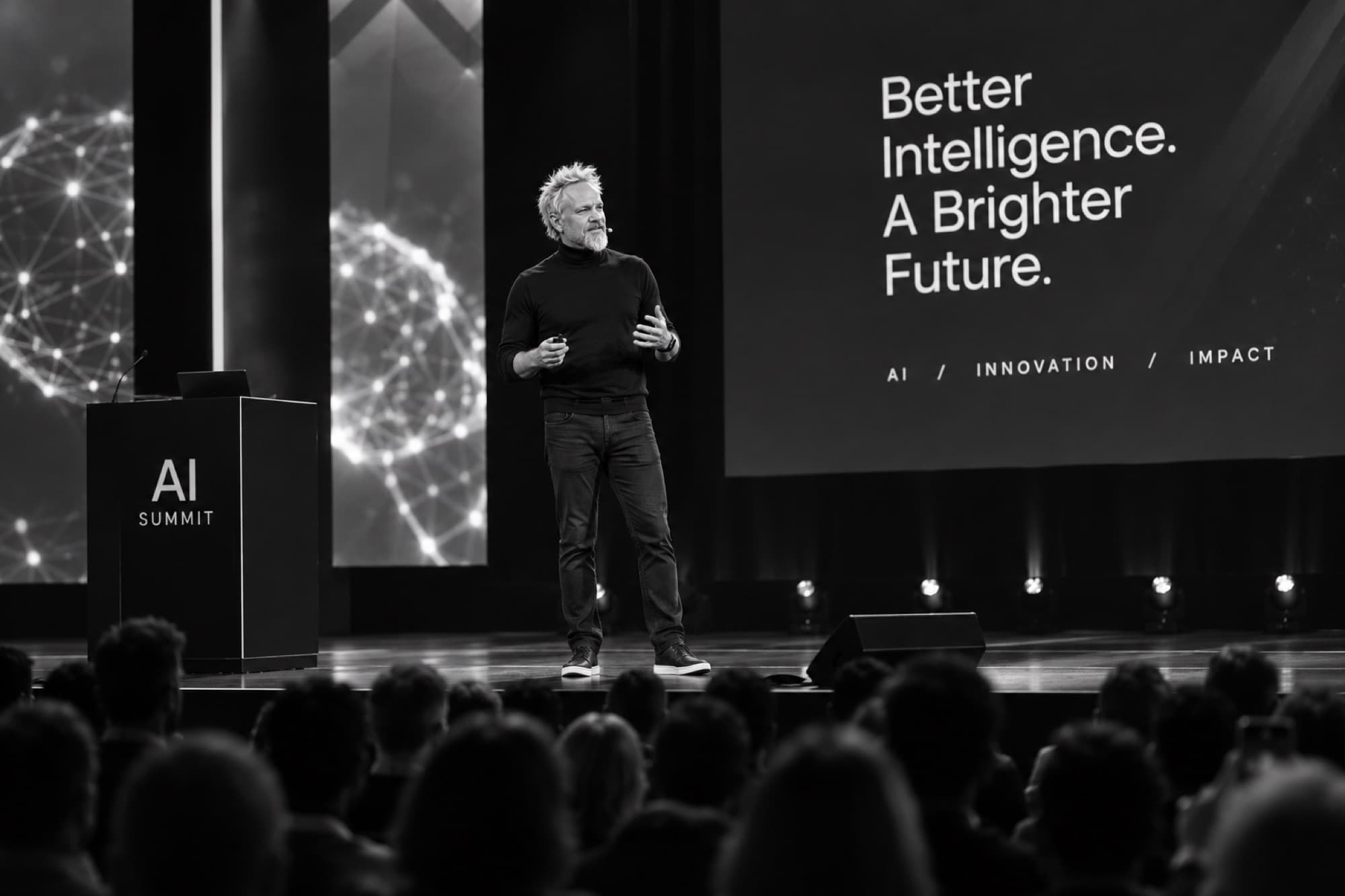
I speak about the technologies transforming our world, the assumptions that influence our decisions, and the opportunities that emerge when we begin thinking beyond conventional boundaries.
Whether addressing business leaders, technology professionals, entrepreneurs, educators, or curious minds, my objective is to offer more than information. I want audiences to leave with new questions, a deeper understanding of the forces shaping their world, and practical perspectives they can apply to their own work and lives.
Ideas That Challenge the Way We ThinkThe Most Important Conversations Often Happen Between Disciplines.
We tend to organize knowledge into separate categories: technology, business, philosophy, economics, education, and human behavior. Yet the most consequential challenges facing our world rarely respect those boundaries.
Artificial intelligence raises questions about knowledge and judgment. Blockchain challenges our assumptions about trust and governance. Entrepreneurship forces us to confront uncertainty, incentives, and human behavior. Philosophy asks us to examine the beliefs underlying all of them.
My presentations explore these intersections, combining professional experience with research, strategic analysis, and a willingness to question familiar explanations.
I believe audiences benefit most when complex subjects are made understandable without being oversimplified, when competing perspectives are examined fairly, and when big ideas are connected to practical consequences.
Featured Keynotes &Speaking Topics
- 1
Beyond the Prompt: The Next Evolution of Artificial Intelligence
Why the future of AI is about orchestration, verification, and human judgment.
Artificial intelligence is rapidly moving beyond conversational interfaces and simple content generation. The next generation of intelligent systems will increasingly coordinate specialized agents, interact with complex software environments, and participate in professional workflows that require accuracy, accountability, and oversight.
This presentation explores the architectural evolution of AI, including the limitations of standalone language models, the role of deterministic safeguards, and the importance of keeping human judgment central as intelligent systems become more capable.
Drawing on my work developing AI orchestration technology at Codira, I examine how organizations can think beyond individual AI tools and begin preparing for more integrated, accountable intelligent systems.
Inquire About This KeynoteAudiences
Technology conferences, enterprise leadership teams, software developers, AI researchers, professional associations, and innovation summits.
Key Takeaways
- Understand the difference between generative AI and orchestrated intelligent systems.
- Explore why verification and governance matter as AI becomes more autonomous.
- Identify opportunities to apply intelligent workflows within organizations.
- Consider how human responsibilities should evolve alongside increasingly capable technology.
- 2
The Myth of Knowing: Why Certainty Limits Human Potential
What if the greatest obstacle to understanding is believing we already know?
We live in a world overflowing with information, yet access to information does not necessarily produce understanding. Our beliefs are shaped by experience, culture, education, perception, and assumptions that often go unexamined.
Inspired by my philosophical writing in The Myth of Knowing, this presentation explores the difference between knowledge and certainty, the cognitive frameworks that shape our interpretations, and the value of intellectual humility.
Through examples drawn from philosophy, business, technology, and everyday experience, I invite audiences to reconsider the relationship between what they believe, what they know, and what they may have overlooked.
The objective is not to encourage skepticism for its own sake, but to demonstrate how curiosity and a willingness to question our conclusions can improve judgment, creativity, communication, and personal growth.
Inquire About This KeynoteAudiences
Universities, leadership conferences, educational organizations, professional development events, and general audiences.
Key Takeaways
- Recognize how assumptions influence perception and decision-making.
- Understand the difference between information, belief, and understanding.
- Explore the role of intellectual humility in leadership and learning.
- Develop a greater willingness to question familiar explanations.
- 3
Quantum Strategy: Rethinking Business in an Unpredictable World
Why traditional strategic thinking may be insufficient for an increasingly interconnected future.
Most conventional strategic frameworks begin with the assumption that organizations can establish objectives, evaluate conditions, and follow a reasonably predictable path toward desired outcomes.
But today's business environment is shaped by rapidly evolving technologies, interconnected markets, shifting human behavior, and unexpected developments that can fundamentally alter the assumptions underlying even the most carefully constructed plans.
Drawing on the ideas explored in Quantum Strategy, this presentation examines how leaders can approach strategy through systems thinking, adaptive decision-making, experimentation, and the recognition of emerging possibilities.
Rather than treating uncertainty exclusively as a threat, I explore how organizations can develop the intellectual and operational flexibility to recognize opportunities that more rigid approaches may overlook.
Inquire About This KeynoteAudiences
CEOs, entrepreneurs, corporate leadership teams, business schools, strategic planning conferences, and innovation organizations.
Key Takeaways
- Examine the limitations of rigid, linear strategic planning.
- Understand the importance of interconnected systems and second-order consequences.
- Develop approaches to strategic adaptability and organizational learning.
- Recognize how challenging assumptions can reveal unexpected opportunities.
- 4
The Decentralization Paradox: Trust, Power, and the Future of Blockchain
Does decentralization actually change who holds power?
Blockchain technology introduced the possibility of coordinating digital systems without relying entirely on traditional centralized institutions. Yet the existence of distributed infrastructure does not automatically guarantee decentralized authority, transparent governance, or equitable participation.
Drawing on my experience in blockchain development and decentralized network design, this presentation examines the relationship between technical architecture, economic incentives, governance, and human behavior.
I explore the distinction between decentralization as a technological characteristic and decentralization as an organizational reality, including the practical challenges of validator networks, token economics, privileged permissions, and collective decision-making.
The presentation also considers the broader potential of decentralized infrastructure beyond cryptocurrency speculation, including digital ownership, identity, governance, and systems designed to recognize meaningful participation.
Inquire About This KeynoteAudiences
Blockchain conferences, Web3 developers, digital asset professionals, technology investors, governance researchers, and fintech organizations.
Key Takeaways
- Understand the distinction between technical and practical decentralization.
- Examine the importance of transparent governance and accountable network design.
- Explore applications of blockchain beyond speculative digital assets.
- Recognize the relationship between incentives, authority, and system behavior.
- 5
The Future Belongs to Interdisciplinary Thinkers
Why the next generation of breakthroughs may come from connecting ideas that appear unrelated.
Modern institutions often encourage specialization. We organize education, research, and professional expertise into distinct disciplines, each with its own language, methods, and assumptions.
Specialization has produced extraordinary advances, but it can also limit our ability to recognize relationships between problems and solutions that exist in different fields.
My own career has moved between creative design, entrepreneurship, software development, blockchain, artificial intelligence, and philosophy. These experiences have reinforced my belief that many valuable ideas emerge when concepts from one discipline are applied to challenges in another.
This presentation explores the intellectual value of crossing boundaries, becoming a beginner again, and developing the curiosity necessary to recognize connections that conventional approaches may overlook.
Inquire About This KeynoteAudiences
Universities, innovation conferences, research institutions, corporate leadership events, creative professionals, and entrepreneurship programs.
Key Takeaways
- Understand the advantages and limitations of specialization.
- Explore how interdisciplinary thinking supports innovation.
- Recognize the value of lifelong learning and intellectual reinvention.
- Develop approaches to connecting ideas across unfamiliar domains.
- 6
Progress Without Wisdom: The Human Challenge of Emerging Technology
We are becoming extraordinarily capable. Are we becoming equally thoughtful?
Humanity's ability to develop powerful technologies is advancing at an extraordinary pace. Artificial intelligence, biotechnology, decentralized networks, and automated systems are creating capabilities that previous generations could scarcely imagine.
Yet technological capability and human wisdom do not necessarily advance together.
As we create systems that influence economic opportunity, professional decisions, public information, and human relationships, we must confront questions that cannot be answered through engineering alone.
What responsibilities accompany technological power? How should institutions govern systems they may not fully understand? What role should human judgment play when machines can perform increasingly complex tasks? And how do we ensure that progress serves meaningful human purposes?
This presentation brings together technology, philosophy, governance, and human behavior to explore the responsibilities that accompany innovation.
Inquire About This KeynoteAudiences
Technology and innovation conferences, universities, public policy forums, professional associations, and executive leadership events.
Key Takeaways
- Examine the relationship between technological capability and human responsibility.
- Understand why innovation requires ethical and institutional considerations.
- Explore the importance of governance and accountability in emerging technologies.
- Consider how organizations can balance progress with thoughtful oversight.
Additional Speaking TopicsConversations Tailored to Your Audience
Beyond my featured presentations, I welcome opportunities to develop discussions around specific challenges, industries, and areas of interest.
Entrepreneurship & Leadership
- The Entrepreneurial ExperimentWhy building companies requires continuous learning, disciplined execution, and the willingness to reconsider assumptions.
- Trust Is Not a Governance ModelLessons about organizational accountability, transparency, decision rights, and the structures required for durable partnerships.
- The Courage to Begin AgainThe value of reinvention, intellectual curiosity, and learning unfamiliar disciplines throughout life.
Artificial Intelligence & Technology
- AI Assists. Humans Decide.Preserving professional accountability and human judgment in increasingly automated environments.
- Building Reliable AI SystemsUnderstanding the roles of specialized agents, deterministic validation, source verification, and structured workflows.
- The Future of Professional SoftwareHow AI-native applications may reshape legal practice, software engineering, business operations, and other knowledge-intensive industries.
Philosophy & Human Understanding
- The Illusion of CertaintyHow cognitive assumptions shape our understanding of the world.
- The Difference Between Intelligence and WisdomWhy information and cognitive ability alone do not guarantee sound judgment.
- Learning to Question What We KnowIntellectual humility as a foundation for creativity, leadership, and lifelong growth.
Blockchain & Digital Trust
- Proof of ImpactExploring systems that recognize and incentivize meaningful participation and contribution.
- Digital Identity in the Age of Artificial IntelligenceThe growing importance of authenticity, verification, privacy, and trust.
- Governance by DesignWhy the rules governing a technology may matter as much as the technology itself.
Speaking FormatsThe Right Conversation for the Right Audience
I believe the most effective presentation is one designed around the people in the room, the questions they are confronting, and the outcomes they hope to achieve.
Conference Keynotes
Thought-provoking presentations designed to introduce important ideas, challenge conventional thinking, and give audiences new perspectives on technology, business, philosophy, and innovation.
Typical Duration: 30–60 minutes
Executive Leadership Sessions
Focused discussions with leadership teams exploring emerging technologies, strategic uncertainty, organizational innovation, and the practical implications of artificial intelligence.
Typical Duration: 60–90 minutes
Fireside Chats & Moderated Conversations
Interactive conversations that allow for deeper exploration of complex subjects, personal experiences, and emerging ideas through a more informal format.
Typical Duration: 30–60 minutes
University & Academic Discussions
Presentations, guest lectures, and research conversations exploring the intersection of technology, philosophy, entrepreneurship, and human understanding.
Typical Duration: 45–90 minutes
Panels & Industry Forums
Participation in moderated discussions with industry leaders, researchers, entrepreneurs, and subject matter experts on the technological and societal questions shaping our future.
Podcasts & Media Interviews
Long-form conversations about entrepreneurship, artificial intelligence, emerging technologies, writing, research, and the ideas that have shaped my professional journey.
All formats may be considered for in-person or virtual participation. Topics, duration, and presentation structure can be adapted to the audience and event objectives.
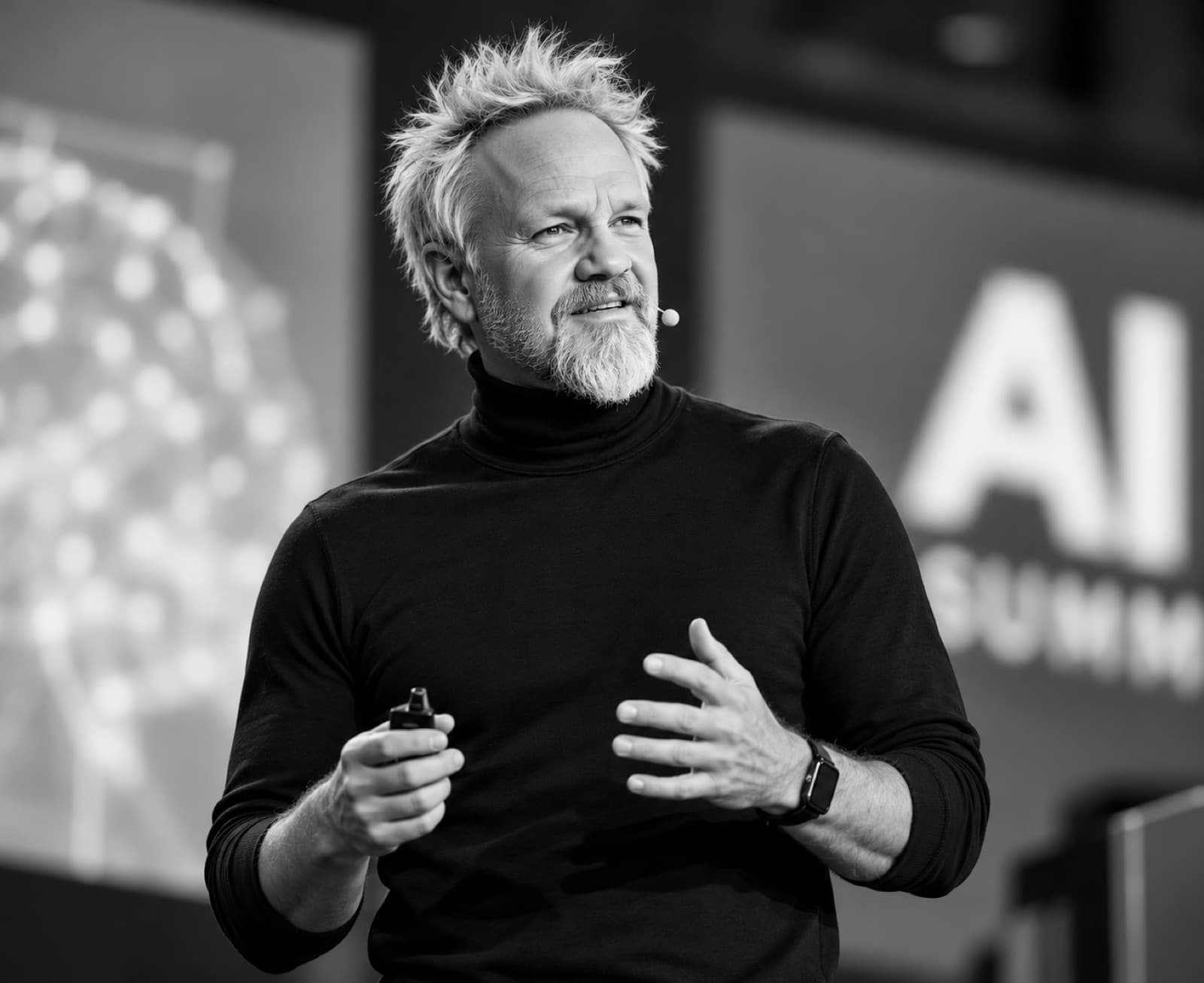
About Bryan FerreEntrepreneur. Author. Inventor. Independent Thinker.
Bryan Ferre is an entrepreneur, author, and technology innovator whose professional experience spans more than three decades across creative strategy, business development, software platforms, decentralized infrastructure, and artificial intelligence.
He is the founder and CEO of Codira, an AI research and development company focused on intelligent software systems that combine specialized AI agents, structured verification, deterministic safeguards, and human oversight.
His professional background includes serving in senior leadership roles within technology companies, co-creating Optio Blockchain, and founding Bryan Ferre Creative, where his work has encompassed strategic consulting, branding, innovation, and product development.
He is also the author of The Myth of Knowing and Quantum Strategy, works that explore the nature of understanding, uncertainty, human judgment, and strategic thinking.
Bryan's interests extend across artificial intelligence, philosophy, blockchain, entrepreneurship, governance, education, and emerging technologies. His speaking reflects an interdisciplinary perspective shaped by professional experience, independent research, and a belief that meaningful progress begins with the willingness to question conventional assumptions.
Invite Bryan to SpeakBring a Different Perspective to Your Next Event.
Whether you're organizing a technology conference, leadership summit, university lecture, professional gathering, or an intimate executive discussion, I welcome opportunities to contribute to conversations that matter.
My presentations are designed to make complex ideas accessible without sacrificing intellectual depth. I aim to give audiences a clearer understanding of emerging challenges, introduce perspectives they may not have considered, and encourage the kind of questioning that leads to better decisions.
If you're planning an event and believe my experience or research could contribute to the discussion, I'd welcome the opportunity to learn more.
Following submission, you will receive confirmation that your inquiry has been received. Event details, availability, presentation objectives, and other arrangements can then be discussed directly.
Speaking Inquiry Form
Media & InterviewsContinuing the Conversation
I also welcome thoughtful conversations with journalists, podcast hosts, researchers, authors, and media organizations exploring subjects related to my work.
My interests include artificial intelligence, technology development, decentralized systems, entrepreneurship, philosophy, strategic thinking, and the broader implications of emerging innovation.
For interview requests, podcast appearances, expert commentary, or research discussions, please contact me through the media inquiry form.
The Best Ideas Begin with a Conversation.
I don't believe a successful presentation is measured solely by the information delivered or the applause that follows. Its real value lies in what people continue thinking about afterward.
If a conversation causes someone to question an assumption, recognize an unexpected possibility, or approach a familiar challenge with greater curiosity, then something meaningful has happened.
Those are the conversations I want to be part of.
Let's Start a Conversation.
Book Bryan Ferre